Ahead of the Holiday, 143 Million People Expected to Travel; Government Begins Preparations
Source: SuaraJawaTengah.id
LPM CAMPUS – Mudik refers to the practice of migrants or migrant workers returning to their hometowns. In Indonesia, mudik is synonymous with an annual tradition that takes place ahead of Eid al-Fitr. This tradition has once again become an annual phenomenon marked by a significant increase in travel ahead of Eid al-Fitr. This year, specifically in 2026, the Transportation Policy Agency estimates that the peak of the mudik travel period will occur on Wednesday, March 18, 2026. Meanwhile, the Ministry of Transportation and relevant parties predict that the mobility of the Indonesian population during the 2026 Eid al-Fitr homecoming period will amount to 50.60% of the population, or approximately 143.91 million people. This figure indicates that half of Indonesia’s population will be on the move during a relatively concurrent timeframe.
This forecast serves as the basis for the government in formulating anticipatory measures during the exodus period. In recent years, the number of travelers has often approached or even exceeded initial estimates. This situation has prompted the government and relevant parties to prepare various transportation policies or regulations to mitigate potential traffic jam or overcrowding.
Land transportation, particularly private vehicles, remains the primary choice for people traveling home for the holidays this year. Meanwhile, public transportation such as buses continues to be used by the public, especially those without their own vehicles as an alternative mode of travel.
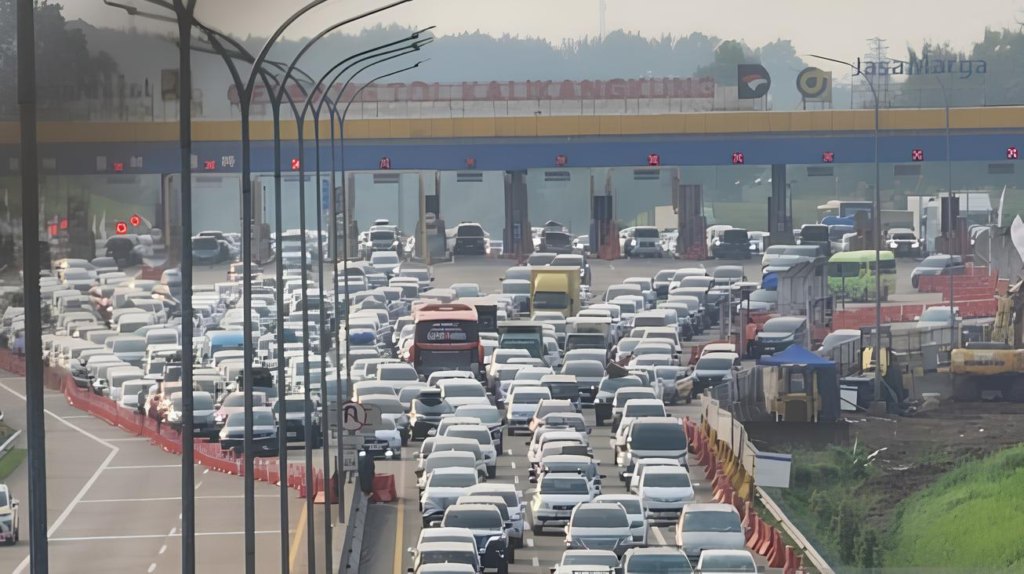
The high percentage of private vehicle usage has the potential to increase traffic congestion on various major roads. The number of vehicles is expected to increase gradually. This situation can lead to traffic jams, especially on routes that serve as the main pathways for travelers. This increase heightens the potential for traffic congestion or heavy traffic flow at the same time.
In an effort to anticipate traffic congestion, the government, together with law enforcement, is preparing traffic management strategies. Traffic measures such as one-way systems, contraflow, and restrictions on the operation of heavy-duty vehicles will be implemented at specific locations based on on-site conditions.
In addition to traffic management, the government is also preparing supporting facilities to facilitate the smooth flow of travel for people returning to their hometowns. Security checkpoints and travel assistance stations have been set up along various routes to monitor traffic conditions and help travelers stay safe.
It is hoped that the availability of these facilities will help reduce the risk of disruptions during the journey.
The increase in mobility during this annual exodus is not limited to land transportation but extends to other modes of transportation as well. According to data from the Ministry of Transportation, the number of passengers on both air and rail routes has also risen as the Eid al-Fitr holiday approaches.
To support this surge, a number of transportation operators have increased passenger capacity in their services, both by adding more trips and increasing the number of vehicles in operation. This step was taken to reduce potential congestion and provide travel alternatives for the public. In addition to increased capacity, infrastructure readiness is also a key factor in ensuring a smooth exodus. The government ensures that various transportation facilities, including toll roads, bus terminals, and train stations, are in good working order and ready for use during the holiday travel period.
On the other hand, the annual exodus also has a positive impact on a number of economic activities, particularly at rest areas, along transportation routes, and at departure points. The increasing number of travelers contributes to higher sales of food, beverages, and other necessities. While these economic activities are typically seasonal, they play a significant role in helping local bussiness operators to boost their income. As public mobility increases, economic opportunities for the community also expand.
Behind this increased mobility, travel risks also rise. The high volume of vehicles combined with long travel durations can lead to fatigue, which may contribute to an increased risk of incidents during the exodus period.
Therefore, to ensure a smooth journey, travelers are encouraged to prepare thoroughly, including ensuring their vehicles are roadworthy, adhering to traffic regulations, and maintaining their physical condition throughout the trip. Additionally, travelers are advised to take regular breaks to avoid fatigue, which can increase the risk of accidents.
With hundreds of millions of people on the move, coordination between the government, law enforcement, and the public is essential to ensuring the smooth flow of the annual exodus. Various preventive measures that have been put in place are expected to minimize potential obstacles during travel during the exodus period. The exodus is not merely an annual increase in mobility but also reflects the social dynamics of Indonesian society. With thorough preparation and effective management, the public’s exodus journey is expected to proceed in an orderly, safe, and smooth manner without any obstacles.
Writer: Salwa Nurul Aini Rakantika/Communication Science ’25
Editor: Bela Diana Puspitasari/Physiotherapy ’24
Layouter: Nurhabibah Khoirotunnisa/Medicine ’24