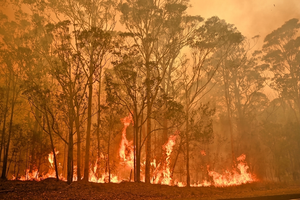
Kalimantan Fires Burn 285,000 Hectares as Haze Reaches Neighboring Countries
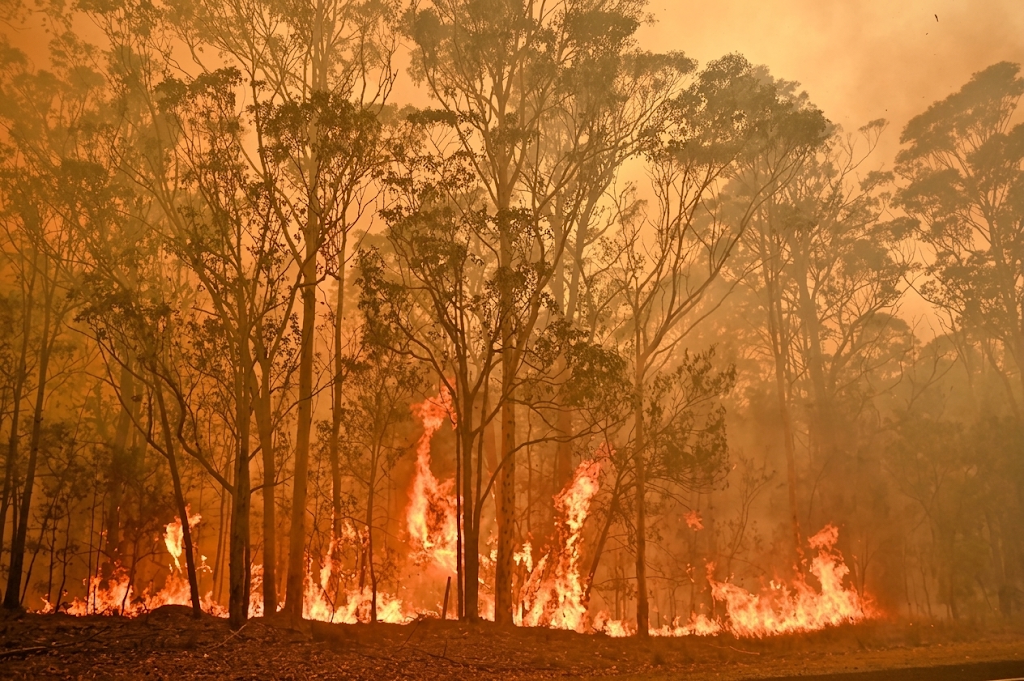
Source : koran-jakarta.com
LPM CAMPUS – Data shows that the scale of ecological damage on the ground is becoming increasingly massive. The National Disaster Management Agency (BNPB) detected 1,487 hotspots in Kalimantan as of August 19, 2026. Monitoring by the Nusantara Atlas platform confirms that the total area burned throughout 2026 has exceeded 285,000 hectares, with 182,000 hectares of that burned in the month of July alone. Findings from Greenpeace Indonesia further underscore this crisis after identifying 592 sources of smoke, 455 of which are concentrated in highly vulnerable peatland landscapes. The drying of peat domes due to extreme weather accelerates the spread of fire, while also hindering the reach of firefighting crews in isolated areas.
The widespread forest and land fires (Karhutla) at several peatland sites across Kalimantan suddenly drew widespread public attention after video footage of the conditions on the ground went viral on social media. Footage showing thick smoke that limited the visibility of drivers on interprovincial highways sparked widespread public concern. In response to the escalating ecological crisis, the Joint Task Force, together with law enforcement and local government officials, moved quickly to step up emergency response efforts and investigate potential legal violations behind this annual disaster.
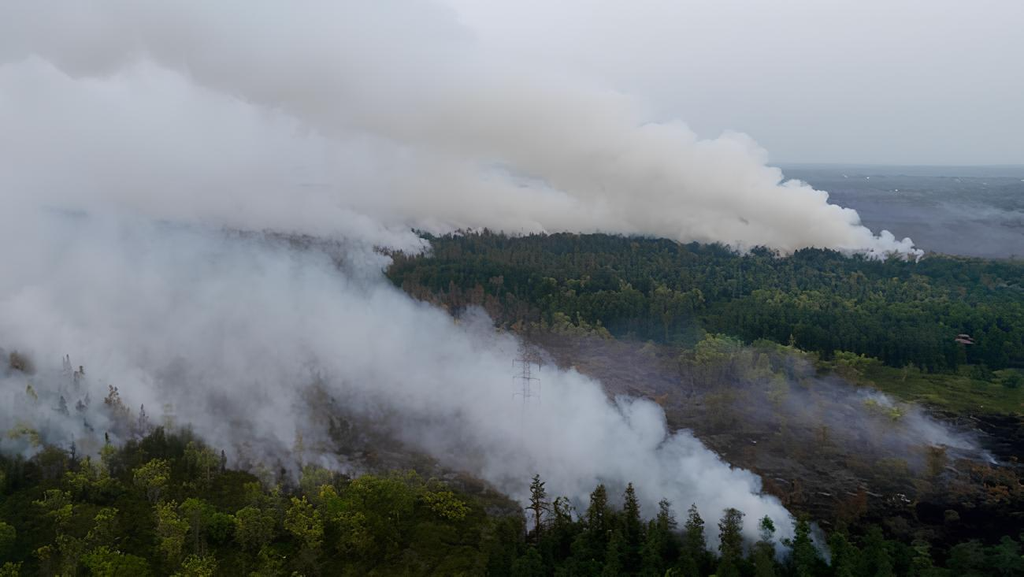
Source : cnbcindonesia.com
The expansion of the burned areas has had a direct impact on a drastic decline in air quality in various residential areas. Based on measurements of the Air Pollutant Standard Index (ISPU), several inland and urban areas have recorded air quality levels ranging from “Very Unhealthy” to “Dangerous” for human health. The thick haze not only disrupts the flow of land transportation and domestic flights but also triggers a surge in cases of Acute Respiratory Infections (ARI) at various local health facilities. In fact, the spread of this forest and land fire smoke has the potential to continue expanding, affecting air quality in neighboring countries—which has led to the temporary closure of hundreds of schools in Malaysia due to smoke exposure from Kalimantan.
On the front lines of firefighting, a joint team of personnel from Manggala Agni (Ministry of Environment and Forestry), the Indonesian National Armed Forces (TNI), the Indonesian National Police (Polri), the Regional Disaster Management Agency (BPBD), and volunteers are racing against time to navigate extreme terrain and extinguish peat fires that have spread several meters below the ground’s surface. The nature of underground fires—which easily reignite when blown by strong winds—and the limited water supply in this arid area have forced ground teams to work overtime into the night to contain the flames and prevent them from spreading to residential areas. To overcome the limitations of ground access, the government deployed water-bombing helicopters to douse isolated hotspots from the air, while simultaneously preparing a Weather Modification Technology (TMC) operation to moisten the dried-out peat domes. This combination of ground patrols and aerial intervention is the Task Force’s primary strategy for curbing the spread of new hotspots.
To protect the public from exposure to hazardous smoke, local authorities have declared a Forest and Land Fire Emergency Alert Status, accompanied by preventive measures such as shifting in-person learning to distance learning (PJJ) and distributing free masks in public spaces. This declaration provides budgetary flexibility and enables the mobilization of personnel to address ecological impacts on the ground. However, a number of environmental observers believe that this emergency response policy, which is repeated every year, indicates a lack of early prevention strategies. The escalation of the disaster—now widely exposed on social media—should not only be addressed with symptomatic measures but should also serve as a catalyst for non-discriminatory law enforcement against corporations responsible for triggering the fires. The success of this crisis response can no longer be measured solely by how quickly the fires are extinguished, but rather by how boldly all stakeholders fundamentally reform peatland management to permanently break the cycle of haze disasters.
Writer : Bela Diana Puspitasari/Physiotherapy’24
Editor : Salwa Nurul Aini Rakantika/Communication Science ‘25