Facing the Climate Crisis: Building Awareness and Practical Solutions

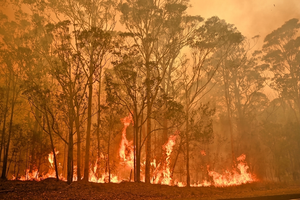
Source: https://www.shutterstock.com
The climate crisis often sounds like a global issue that is far removed from our daily lives. In fact, its impact is already present around us, in the form of increasingly unpredictable weather, difficult-to-predict seasons, declining air quality, and an increased risk of natural disasters. All of this shows that the climate crisis is not just an environmental problem, but also a social and community welfare issue. Therefore, building awareness is no longer an option, but an urgent need that must be addressed collectively. The climate crisis is not only about environmental issues, but also touches on aspects of social justice. Inequality occurs where the most vulnerable groups, such as small farmers, coastal communities, residents of vulnerable areas, women, and children, tend to suffer the most because they have little room to survive.
As a society, we often feel that solutions to the climate crisis must come from large entities such as the government or national institutions. In fact, we as a society can also make efforts to prevent and overcome these problems. It cannot be denied that one of the causes of natural disasters in Indonesia is the behavior of people who are not responsible for their environment. The climate crisis is a shared problem, which means that everyone, without exception, has their own share of responsibility. This awareness can then become the first step in changing the way we view the environment and the future.
Indonesia, as an archipelagic country, is highly vulnerable to climate crises. Global warming exacerbates the extreme weather that often hits Indonesia. Major floods, landslides, and prolonged droughts are now occurring more frequently, disrupting economic activity and community welfare. Practical solutions do not always have to be large and complicated. Simple things like reducing the use of single-use plastics, conserving water and electricity, choosing more environmentally friendly transportation, and raising awareness to keep the environment beautiful are actions that anyone can take. These small and simple actions can have a big impact if done consistently and collectively by everyone. In addition, community involvement in environmental activities such as reforestation or community-based waste management can also be part of the solution.
In my opinion, awareness and practical action alone are not enough to address the climate crisis; understanding within each individual is also necessary. This understanding can be gained through education about climate change that is accessible to all, whether through educational institutions, the media, or communities. When people are given an understanding of how a climate crisis can occur, what causes it, and how its impacts can harm our daily lives, awareness of the importance of protecting the environment will automatically grow within each individual. This can then become a bridge for people to implement simple and innovative solutions to prevent and overcome climate crises, as well as build resilience to face increasingly rapid environmental changes.
Facing the climate crisis is not easy, but that does not mean we cannot do anything. Now is the best time to act by understanding, realizing, and taking small, realistic steps. By combining collective awareness and practical solutions, we can create meaningful change and, most importantly, shape a safer and more sustainable environment for our future.
|
Source: Yayasan Indonesia Cerah. (2025, September 24). Krisis Iklim: Ancaman Nyata yang Masih Diremehkan Indonesia. Cerah. https://www.cerah.or.id/id/publications/article/detail/krisis-iklim-ancaman-nyata-yang-masih-diremehkan-indonesia
|
Writer: Madina Siti Nur ‘Aisyah/Public Health ‘23
Editor: Naira Afza Salsabilla/Nutrition Science’23