The Controversy Over the TNI Dual-Function Bill: A Threat to Indonesia’s Democracy?
Source: LPM Campus
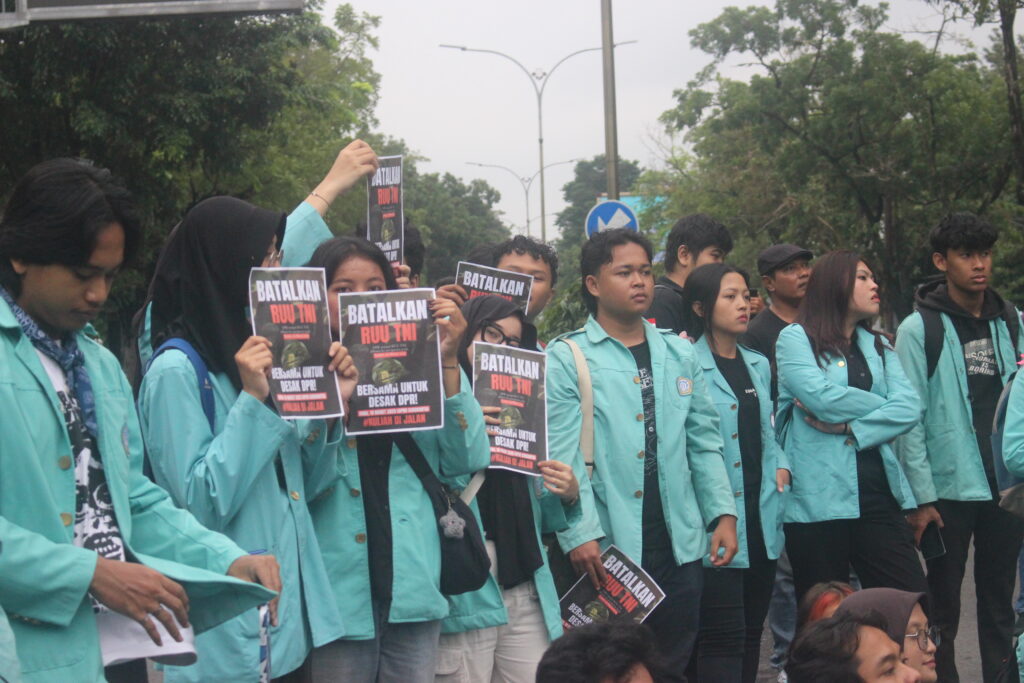
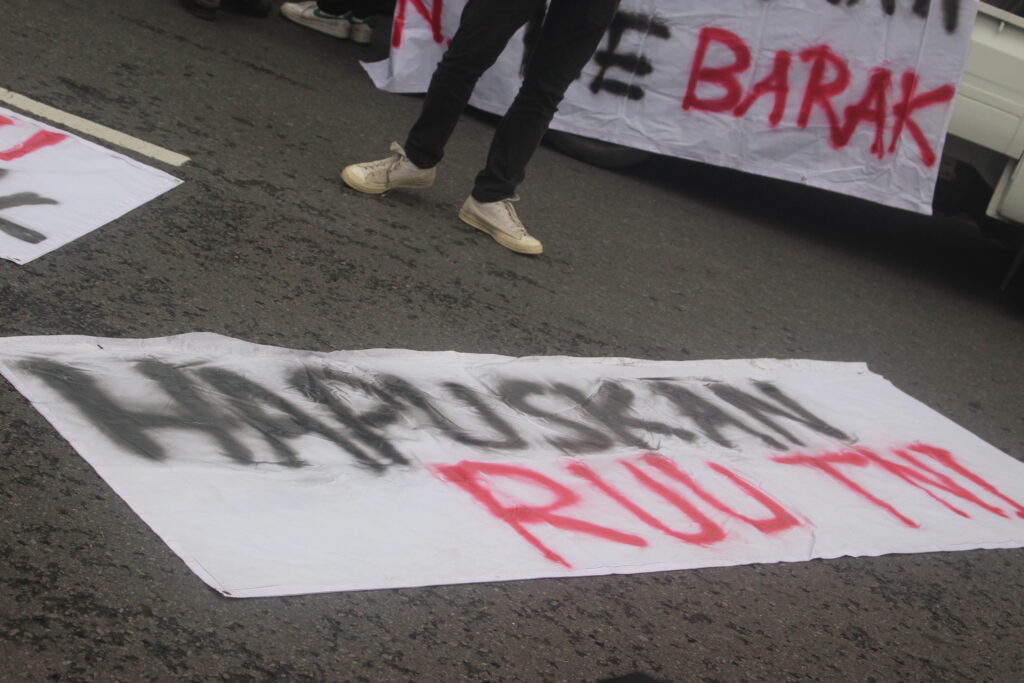
LPM CAMPUS, SOLO – The proposed bill (RUU) that could reinstate the dual-function
(dwifungsi) of the Indonesian National Armed Forces (TNI) has sparked protests among
students and activists. Many fear that this regulation would push Indonesia back to the New
Order era, where the military played a dominant role in civilian governance.
Aulia, a student from Universitas Sebelas Maret (UNS) who participated in the protest,
expressed her concerns. She believes that if this bill is passed, Indonesia will experience a
democratic setback.
“If this is passed, Indonesia will likely return to the New Order era, where the TNI had
significant power in the government. The policies they implement will inevitably have strong
military influences,” said Aulia.
These protests are fueled by painful memories of the past. In an interview with a 1998
reform activist, Ibu Urrie Baret, she warned that the dual function of the military in the past
had led to serious human rights violations.
“In 1998, many activists were abducted and killed for daring to criticize the government. If
this bill is passed, the democracy we have fought for will be destroyed, and our reform
efforts will be in vain,” she stated.
Another major concern is the neutrality of state institutions. Ibu Urrie emphasized that if the
TNI is once again given a role in governance, they will likely serve the government’s interests
rather than the people’s.
Source: LPM Campus
“The TNI should remain a state instrument focused on defense, not interfere in civilian
affairs. If this dual function returns, the policies enacted could be more repressive against
the public,” she added.
Beyond the threat to democracy, students are also highlighting the bill’s impact on civilian
employment opportunities. If military personnel start filling government positions, space for
civil servants (ASN) and ordinary citizens—especially women—will become increasingly
limited.
Despite the protests, demonstrators acknowledge that the bill is likely to be passed.
“I know that this bill will most likely be passed tomorrow. But at the very least, we have
voiced our opposition. This is the first step in continuing to monitor government policies,”
said Aulia.
Many hope the government will listen to the public’s concerns and reconsider the bill’s
potential consequences. If not, Indonesia may face an even greater democratic crisis in the
future.
|
Writer: Fifa Chorina Azka Qonita (Department of English Education‘23)
Editor: Naufal Ahmad Alfian (Communication Science‘22)